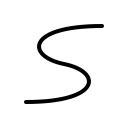
Processes, not fixed labels
Notice what arises, changes, and ceases. Express experience and behavior without turning a moment into a permanent identity.
A small language for mindful reflection
Thinking with awareness.
A few roots for the things that happen. A place for any word you need. A language for noticing experience, expressing intention, and speaking with care.
Let the language grow through experience.
01 / Introduction
Treenmun is a Buddhist-inspired constructed language for mindful reflection, everyday conversation, journaling, and compassionate expression. It complements your ordinary language rather than replacing it.
Its name joins treen, “attend mindfully,” with mun, “think”: thinking with awareness, pronounced /ˈtreːn.mun/ under the working phonology. Learn a small vocabulary of processes, then borrow everything else between ka and tu. You can start using it before learning a large dictionary.
Notice what arises, changes, and ceases. Express experience and behavior without turning a moment into a permanent identity.
Describe the guitar being used or the feeling being experienced. Make the relationship explicit rather than relying on a grammatical possessive.
Distinguish wanting, intending, and acting; distinguish direct observation from inference. Describe harm and relief without declaring an inherent moral essence.
Ka fear tu rang. Ka fear tu tsen. Ka fear tu shen.
Fear arises. Fear changes. Fear ceases.
Current core: 35 morphemes—20 native roots, 13 grammar endings (nine lesson endings and four additional confirmed endings), and two borrowing markers. The script shown here includes the latest equal-height glyphs, enlarged dots, and centered-dot sentence endings.
02 / Reading
English words sit inside the opening and closing borrowing signs. Native roots and grammar appear as glyphs, with a centered dot at each sentence ending.
morning pale light the window rain breath the waking city
warm water bread sleep a small intention the road
A visual specimen, not an authoritative grammar exercise. The full text has 12 sections and 60 paragraphs; some constructions are exploratory. Hover over native words for their readings and morpheme meanings.
03 / Vocabulary
Roots name processes and can serve flexible grammatical roles. Compounds are head-final: earlier roots describe the final root. Click a root’s name to open its standalone SVG.
20 roots
arise, emerge
Lesson 1cease, end
Lesson 1change, transform
Lesson 1do, act
Lesson 1use
Lesson 1go, move
Lesson 1experience, feel
Lesson 1think, thought
Lesson 1attend mindfully, awareness
Lesson 1condition, contribute to
Lesson 1eat
Lesson 2drink
Lesson 2sleep, rest
Lesson 2see, look
Lesson 2hear, listen
Lesson 2speak
Lesson 2make, create
Lesson 2want, desire
Lesson 2harm, cause harm
Lesson 2relieve suffering
Lesson 2No matching roots. Try a different word or reset the filters.
kaOpen a borrowed concept.
tuClose a borrowed concept.
shen means cease; suun means relieve suffering. They are distinct roots. Native roots are monosyllabic; native words stress the first syllable and distinguish long from short vowels. See word shape.
04 / Grammar reference
Describe processes and relationships without requiring fixed identities. This reference separates established rules and lesson meanings from working forms and proposals.
The normal order is Subject–Object–Process (SOV). Understood participants may be omitted; a process can occur without an agent. Bare predicates specify neither tense nor aspect unless context supplies them. Endings are optional.
ka Anna tu ka bread tu kan.
Anna eats bread.
ka fear tu rang.
Fear arises.
There are no native personal pronouns, grammatical person, gender or person agreement. Use names when clarification matters; otherwise omit participants. The current design has no articles, agreement markers or irregular conjugations or declensions.
There is no unrestricted equative copula: avoid treating “X is Y” as a universal construction. Describe observable behavior, experience, function or conventional designation instead. This does not forbid accurate properties or social and legal relationships; precise constructions remain under development. See the root vocabulary.
ka … tuka opens a foreign or conventionally defined concept; tu closes it. Enclose a word, phrase, name or quoted thought and treat it as one concept in the surrounding clause. Borrowed material is exempt from native grammar and sound rules and may retain its original script. The enclosure marks a conventional label, not falsehood or harm.
Ka tea tu lumil.
Currently drinking tea.
Escaping and nesting borrowing delimiters are not yet specified. Foreign quotations remain borrowed material, not native Treenmun clauses.
The vowel–consonant (VC) suffix pattern is established. These nine meanings and their written signs are retained, but every individual pronunciation below except -en is a working proposal, not separately ratified.
| Sign | Form | Meaning |
|---|---|---|
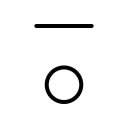 | -en | Relationship; relative description. |
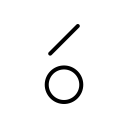 | -ek | Negation: not. |
 | -om | Possibility: may, can. |
 | -us | Intention: intend to. |
 | -il | Ongoing aspect: an unfolding process. |
 | -at | Completed aspect: a completed process. |
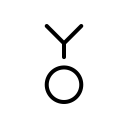 | -am | Question. |
 | -ed | Direct observation. |
 | -ir | Inference. |
Aspect is not tense: -il and -at describe unfolding or completion, not present or past time by themselves. Evidence is not guaranteed truth: ranged marks arising as directly observed; rangir marks it as inferred.
numilam?
Currently sleeping?
ROOT → [derivation] → [aspect] → [negation] → [modality] → [evidence] → [question]
Brackets mark optional slots. -en has a separate relational function. In the default order, rangilomir means “inferred to be possibly arising now”; drekekus means “intend not to harm.”
Proposed A broader scope rule would let each successive suffix operate on the preceding expression. This could contrast drekekus with drekusek, “not intend to harm.” The latter reverses the default order; free reordering is not an established rule.
Attach -en to a process, then place the described concept after it:
[optional participant] + [process-en] + [concept]
ka guitar tu zum is a clause, “using a guitar”; zumen ka guitar tu describes “a guitar being used.” Adding a participant gives ka Anna tu zumen ka guitar tu, “a guitar Anna uses.” A description can enter a larger clause:
saamen ka fear tu tsenom.
The fear being experienced may change.
-en does not mean ownership. Which participant it describes—agent, patient, place or another role—remains unresolved; use context or explicit descriptions. Custody, permission, consent and responsibility are not excluded merely because grammatical possession is absent.
These four forms and functions are confirmed, in addition to the nine lesson endings. They differ from logical negation, -ek, “not X.”
| Sign | Form | Confirmed meaning |
|---|---|---|
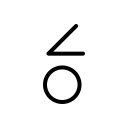 | -ov | Counteract or prevent X; rangov, prevent arising. |
 | -er | Semantic opposite of X, where defined. |
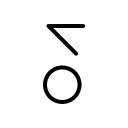 | -ul | Reverse or undo X’s effects; drekul, repair harm’s effects. |
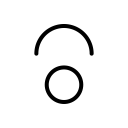 | -um | Absence; without X. |
A semantic opposite is not necessarily a logical complement, and not every root has an unambiguous opposite. /v/ is used in confirmed -ov; the general sound inventory remains provisional. The independent root suun, “relieve suffering,” is not a negation suffix.
Each semantic root is one syllable, starting with a consonant and ending with exactly one consonant. Initial clusters are allowed; final clusters are not. Suffixes are VC; independent ka and tu are CV exceptions. Long and short vowels differ: doubled vowels mark length, not extra syllables. Primary stress falls on the first syllable, including in compounds. sh, ts and ng each represent one consonant. Compounds are head-final, but rules for handling their internal consonant clusters remain undecided.
Root and suffix signs share the same displayed height and stroke weight. Suffixes share a lower ring; -us has a straight two-line peak and -am a forked form. Dots are enlarged for clarity. A centered dot marks sentence endings in rendered glyph examples; romanization may retain Latin punctuation. These current script decisions supersede older descriptions.